Home » Aetolia Races: All 24 Playable Races » The Dwarves of Aetolia

The Dwarves of Aetolia

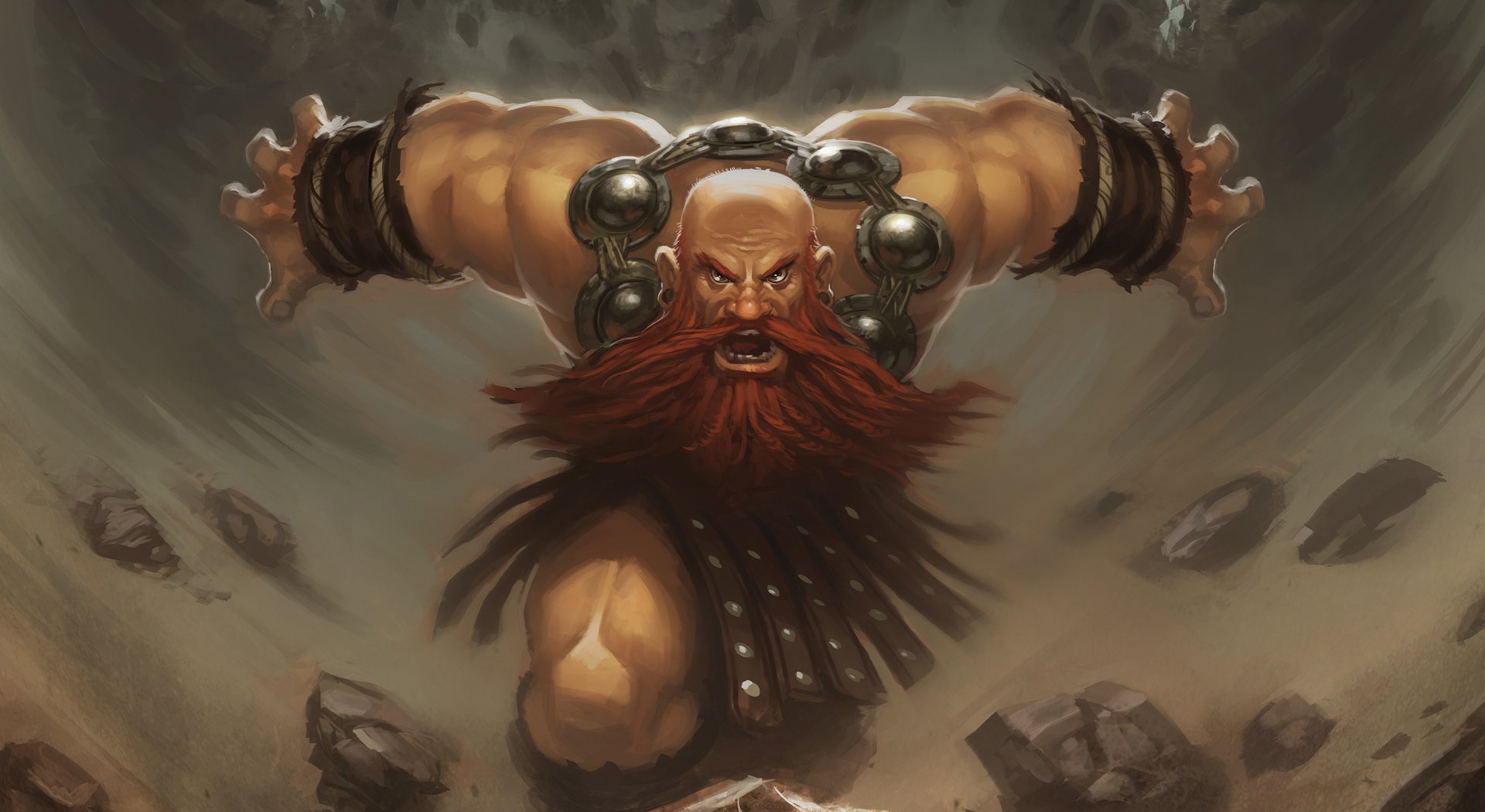
A red bearded dwarf with muscular arms lifting a massive stone golem above his head

The Dwarves of Aetolia came down from the Vashnar mountains in the southwest, took a name that started as an insult, and made it stick. They favour stone, hearth, and clan over the wider continent’s quarrels, and their craftsmanship has been a point of friction with the Orcs for generations: each side claims the credit for half the forge-techniques currently in use. If you want a race grounded in clan loyalty, mountain culture, and a long memory for who did what to whom, the Dwarves fit.

At a glance

At a glance
Native regionVashnar mountains (origin); now widespread across mountains and highlands
Cultural homeNo single city; clan-anchored across the Vashnars and Sapience’s highland regions
Spiritual frameDhar and Ivoln, two Gods who were once a single deity the Dwarves revered
Distinctive traitClan-bound mountain-folk with a centuries-deep tradition of craft and feast
Suits play stylesClan roleplay, crafting, religious tradition, faction-flexible characters
Gender lockNone

Dwarf lore and origin

The first Dwarves emerged from the Vashnar mountains some Epochs ago and began migrating northward and eastward during the rise of the Dark Empire. They were known then as the Hlugna. The name “Dwarf” started as a slight from outsiders. The Hlugna took it, kept it, and made it their own, which tells you something about how the race tends to handle insult.

Dwarven culture leans toward sophisticated arts and crafts, with a deep appreciation for home, hearth, and celebration. That softer side coexists with a long history of military innovation, and the running argument with Orcs about who invented which forging technique or which weapon prototype has never really been settled. Clan divisions still run deep. Dwarves identify with their clan first and the race second, which makes “speaking for all Dwarves” a thing no Dwarf actually does.

The ancient Dwarf empire is also part of the race’s modern reputation, because that empire once enslaved the Mhun. The continent remembers. So do the Mhun. A modern Dwarf character can lean into that history, distance themselves from it, or pretend it never happened, and other players will read each choice differently. If you want a race whose lore gives you real material to work with, the Dwarves carry centuries of it.

Dwarf appearance

Dwarves resemble short, stocky Humans. Eye, skin, and hair colours vary as widely as they do in Humans, since the two populations have lived alongside each other and intermarried for a long time. Build is the strongest racial marker: low centre of gravity, broad shoulders, dense bone. A Dwarf in armour is a different silhouette from a Human in the same armour.

Clan markings, beard styles, and craft-jewellery carry far more cultural weight than physical features. A Dwarf reading another Dwarf at a tavern is reading the braids, the rings, and the clan tokens, not the face.

Dwarf racial abilities

The Dwarves have three racial abilities, unlocked at character creation, level 31, and level 61.

  • Alcohol Consumer (available at character creation). Passive. When you consume alcohol, it acts like food and satiates your stomach. The amount of nutrition depends on the strength of the drink. The whole race takes its evenings seriously, and the system reflects it.
  • Tremor Sense (unlocks at Level 31). Syntax: `TREMORSENSE`. Your feet have become sensitive to vibrations in the earth, so you can sense if there are adventurers burrowing through the ground in the area below you. Useful in mountains and underground regions where players actually try to slip past you.
  • Goldluck (unlocks at Level 61). Passive. Luck is not always on your side, but when it comes to gold, it tends to find you. When you defeat denizens of the realm and they drop gold, you find an extra 1 to 5 gold on top.

The package is grounded, mountain-themed, and gently mercantile. None of these abilities are flashy in combat, but they fit the race’s identity, and Goldluck in particular rewards staying with a Dwarf past level 61.

Dwarf base statistics

Aetolia uses statpacks, a separate choice from race that sets your five base stats. The values below are the racial baseline before statpacks apply.

StatValue
Strength10
Dexterity9
Constitution14
Intelligence12
Wisdom14

Dwarves lean hard into Constitution and Wisdom, with average Intelligence and lower Strength and Dexterity. That profile reads as durable, considered, and slow to anger, which suits the lore. Your statpack still does most of the actual work.

How to roleplay a Dwarf in Aetolia

  • Cultural anchor. Clan first. A Dwarf character’s clan name, hearth-region, and family craft do more for roleplay than their birthplace. The Vashnar mountains are the historical homeland, and many Dwarves still trace their line there, but the diaspora is broad. The ancient Dwarf empire enslaved the Mhun, so a modern Dwarf travelling in Mhun country may carry weight whether they want to or not.
  • Faction-cultural alignment. Independent and varied. Dwarves are not pinned to any of the four city-states. You’ll find them in Enorian, Spinesreach, Duiran, and even Bloodloch, with each clan and family making its own choice. The migration during the Dark Empire era left a long memory of resisting tyranny, but that memory cuts in different directions depending on whose tyranny you think is current.
  • Religious texture. Most Dwarves divide their reverence between Dhar, the Underking, and Ivoln. The two were once a single God whom the Dwarves revered together, and the split is treated as a defining theological event in clan tradition. Some clans favour one over the other. Some try to hold both. Some have set the question aside since Ivoln sacrificed His presence to support the Plane of Earth.
  • Common archetypes. Other players will read a Dwarf as clan-bound, craftsman-leaning, fond of drink, and stubborn about old grudges. Lean into that or push against it. A wandering Dwarf with no clan ties is a striking character precisely because the default cultural read assumes the opposite.

Which Aetolia classes fit a Dwarf

Any race in Aetolia can play any class. Race never locks you out. Some class archetypes share a thematic resonance with Dwarven lore, which can make for a naturally cohesive character.

Teradrim

Earth elementalism and stone constructs. Teradrim’s whole identity is built around stone, which is the Dwarves’ whole cultural identity. The Bloodloch tether creates real tension for clans with long memories of resisting the Dark Empire, and that tension is good roleplay material.

Archivist

Memory, geometric magic, and the careful preservation of arcane knowledge out of Spinesreach. Dwarven culture rewards long memory, painstaking craft, and the discipline of taking generations to do a thing right. An Archivist Dwarf reads as the clan-keeper of records who chose study over the forge.

Sentinel

Wilderness mastery and beast-bonded combat out of Duiran. Sentinel maps onto the highland Dwarf who left the mountain hall for the wilds. The reverence for stone shifts toward reverence for the wider natural world without losing its core.

Monk

Disciplined unarmed combat, training, and tradition. Monk pairs well with the Dwarven preference for craft, discipline, and the kind of skill that takes a lifetime to build. A clan-trained Monk reads as someone whose discipline came from family before it came from any monastery.

Frequently Asked Questions

Yes. Dwarves are one of the most newcomer-friendly races because the cultural defaults (clan, hearth, craft, mountain) are easy to grasp without deep lore reading. Other players will read a Dwarf at face value, which gives a new roleplayer breathing room. If you want a cleaner slate with no historical baggage, Human is the lighter pick.

Dwarves start with Strength 10, Dexterity 9, Constitution 14, Intelligence 12, and Wisdom 14. Strong in Constitution and Wisdom, slightly below average in Strength and Dexterity. Your final stats depend on your statpack, which is a separate choice from your race. The two systems work independently.

Dwarves have three racial abilities. Alcohol Consumer is available at character creation and lets alcohol satiate your hunger like food. Tremor Sense unlocks at Level 31 and lets you sense adventurers burrowing through the ground below you. Goldluck unlocks at Level 61 and is a passive bonus of 1 to 5 extra gold from denizens who drop gold.

The first Dwarves emerged from the Vashnar mountains in southwest Sapience and migrated northward and eastward during the rise of the Dark Empire. They were known then as the Hlugna. There is no single Dwarven city today. Clans are spread across the continent’s mountain and highland regions, and individual Dwarves are independent of any specific city-state.

Yes. Any race in Aetolia can play any class. Race never locks you out of a class. The class you choose and the time you put in matter far more than your starting race. ## Other races to consider ### Mhun The other underground race, and the one with the most direct historical link. The ancient Dwarf empire enslaved the Mhun, and the memory hasn’t faded on either side. Pick if you want underground texture with a religious renaissance arc instead of a clan-and-craft frame, or if you want a Dwarf-Mhun character pairing with real history behind it. ### Gnomes The other small race, isolationist by temperament where Dwarves are clan-bound by temperament. Gnomes centre on Gorshire, the Valley of Lodi, and enchantment magic, while Dwarves centre on the mountains, the forge, and clan tradition. Useful if you want diminutive stature without the Dwarven clan structure or the historical baggage. ### Troll Another race anchored in the continent’s deep mortal history, with a culture built around endurance and a different relationship to the wilds. Trolls share with Dwarves a sense of being older than most of the political alignments around them. Pick if you want ancient-mortal-race weight without the mountain-and-mercantile framing. ← Back to all races