Home » Aetolia Races: All 24 Playable Races » The Djeirani of Aetolia

The Djeirani of Aetolia

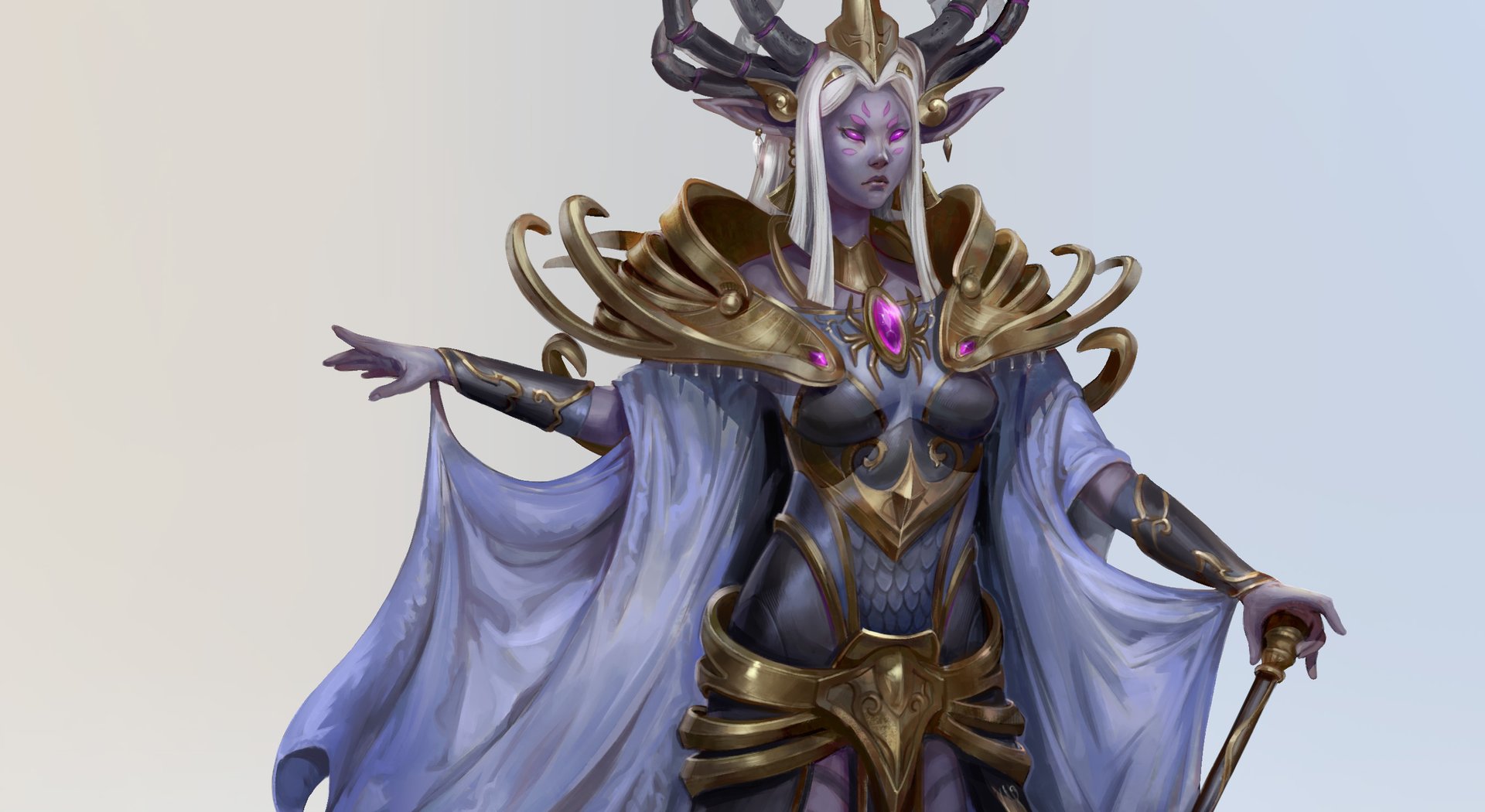
A Djeirani figure with dark skin and amethyst glow eyes desert shaped and meditative

The Djeirani are an old race shaped from spiders by the demon Llazuth, and they have lived deep beneath Azdun in the cavern city of Djeir for so long that sunlight is a foreign experience to most of them. If you want a race built around quiet, patient endurance, toxin resistance, and a rigid caste system that drips with political intrigue, the Djeirani fit. Their strength is patience, not force.

At a glance

At a glance
Native regionThe Black Lake and the cavern city of Djeir, beneath Azdun
Cultural homeDjeir (independent subterranean city)
Spiritual frameWorship of Llazuth, the spider demon they call the Dark Lady, who once served the now-dead goddess Chakrasul
Distinctive traitSpider-blooded subterranean nobles with toxin tolerance, dark vision, and a strict caste system
Suits play stylesPolitical intrigue, caste roleplay, meditative scholar archetypes, subterfuge, beauty-and-death aesthetics
Gender lockNone

Djeirani lore and origin

The Djeirani trace their history as far back as the Second Mortal Epoch, though their actual making is much darker than most outsiders know. Chakrasul sent her proxy Llazuth into Azdun to shape spiders into the first Djeirani in secret, and most of Djeir worships Llazuth without knowing of the deity who worked through her. They named Llazuth the Dark Lady and have worshipped her exclusively ever since.

Djeir itself sits beneath Azdun, around the subterranean territory of the Black Lake. It is a city built from cavern stone, carved into a society as ornate as it is closed. For most of its history, Djeir was sealed off from the surface entirely. In recent years famine forced the issue: the city’s fungi fields ran dry, the Black Lake’s fish populations crashed under overharvesting, and Djeir sent delegations to each surface city to open trade. Even now, surface food is expensive enough that mostly the nobility ever taste it.

Djeirani culture fuses beauty with death. Djeirani swordplay is celebrated for its distracting flourishes and dancelike footwork, and the weapons used are almost always ornamental, with jewel-studded blades and knives forged from precious metals. The aristocracy stages grand theatre, while the criminal underbelly runs quieter dramas of poisoned wine and political assassination. Court intrigue, ritual violence, and centuries of refinement underground all share one vocabulary here. If that mix appeals to you, the Djeirani give you a lot to work with.

Djeirani appearance

Physical coloration carries an enormous amount of cultural weight for the Djeirani because it determines caste. The “ideal Djeirani” has pure black skin and smouldering amethyst eyes, and the closer a Djeirani comes to that ideal, the higher their social standing. Nobility tend toward violet eyes and dark lilac skin. Peasants are almost always green-eyed with reddish or pinkish skin, and can pass for Human at a distance. Other eye colours exist (blue is read as neither noble nor peasant), but those are usually treated as minor genetic deviations rather than markers of standing.

Hair runs almost universally white, with red or brown considered rare and exotic. All Djeirani hair darkens to black with age. Higher castes set themselves apart further with facepaint, tattoos, and an arms race of increasingly elaborate jewelry, and the nobility keep their hair long and their faces clean-shaven. Lower castes are more relaxed about appearance, allowing for beards or body fat that the aristocracy would consider grotesque.

Djeirani racial abilities

The Djeirani have three racial abilities, unlocked at character creation, level 31, and level 61.

  • Meditator (available at character creation). Syntax: `MEDITATE`. When meditating, you gain additional mana and willpower regeneration compared to non-Meditator races.
  • Antivenin (unlocks at Level 31). Passive. Your unique racial heritage allows you to resist deadly venoms more easily, granting you 2% resistance against poison damage.
  • Subversion (unlocks at Level 61). Syntax: `SUBVERT `. Through your entrancing eyes, you can subvert a target’s perception and instill an anonymous thought directly into their mind. There is a chance of detection while using this ability, so it rewards careful timing.

The set rewards patience. Meditator is useful from the first hour, Antivenin softens the venom-heavy parts of Aetolia’s combat as you climb, and Subversion gives you a roleplay tool with real teeth at the level cap.

Djeirani base statistics

Aetolia uses statpacks, a separate choice from race that sets your five base stats. The values below are the racial baseline before statpacks apply.

StatValue
Strength9
Dexterity12
Intelligence10
Constitution12
Wisdom15

Djeirani carry the highest Wisdom score of any playable race in Aetolia, with the lowest Strength to match. That profile reads as meditative scholars and subtle infiltrators more than front-line brawlers, though your statpack does most of the actual work.

How to roleplay a Djeirani in Aetolia

  • Cultural anchor. Djeir, the cavern city beneath Azdun. Almost every Djeirani grew up there, and most have never seen the surface until they leave it. Sunlight is a shock to them, rain is mesmerising, and open sky can feel deeply unnerving. New players sometimes play a Djeirani who spent their first day on the surface staring at clouds, because that is a believable culture shock for a race born underground.
  • Caste obsession. The caste system shapes how a Djeirani sees other Djeirani at first glance. Skin and eye colour matter. Jewelry matters. Hair length matters. You can play that obsession straight (a noble who never quite trusts a green-eyed Djeirani in the room) or play against it (a high-caste exile who repudiates the system entirely). Both are common and both are rich.
  • Faction-cultural alignment. Independent by default. Djeir is its own city-state, not aligned with Bloodloch, Enorian, Spinesreach, or Duiran. When Djeirani do emigrate, Bloodloch is the most common destination, since it is cavernous and shadow-friendly and avoids the sunlight problem. Djeirani who lean toward scholarship sometimes settle in Spinesreach instead.
  • The Moreith and the Eithaga. Djeir’s politics run on two parallel forces: the Eithaga (the nobility’s secret police, enforcing the caste system) and the Moreith (an organised rebellion working to tear down the puppetmasters behind the throne). A Djeirani with anti-establishment roots will know Santini, the Moreith leader, and Irda, his right hand. A Djeirani with loyalist roots will know Grand Inquisitor Serkhat, the real power behind Empress Malieh. You can pick a side, or stay deliberately neutral and let other players guess.
  • Religious texture. Llazuth, the Dark Lady, is the spider demon who shaped the first Djeirani. She is the only deity Djeir worships, and the city does not generally know that Chakrasul was working through her. High Priest Barin has stated publicly that he would worship whatever Divine the Dark Lady was beholden to, if Djeir ever learned the truth. That ambiguity is a real roleplay hook.
  • Beauty and death. The fusion is core to Djeirani aesthetics. Art, literature, swordplay, and assassination all share the same vocabulary. Lean into it.

Which Aetolia classes fit a Djeirani

Any race in Aetolia can play any class. Race never locks you out. Some class archetypes share a thematic resonance with Djeirani culture, which can make for a naturally cohesive character.

Bard

Performance, weaving, and songcalling. Bard is the canonical Djeirani fit, the performer-assassin archetype that mirrors the Djeirani fusion of beauty and death. A Djeirani Bard reads as a noble who turned the city’s love of ornate spectacle into a weapon, or a Moreith infiltrator using stagecraft as cover.

Indorani

Necromancy, tarot, and domination out of Bloodloch. Indorani is the natural pick for a Djeirani who left Djeir for a cavernous neighbour city. The shadow lineage maps onto the Djeirani’s secret heritage through Llazuth and Chakrasul, and Bloodloch’s politics give a displaced Djeirani noble somewhere to be ruthless.

Sciomancer

Shadowmancy, necromancy, and numerology out of Spinesreach. The scholarly mirror to Indorani. A Djeirani Sciomancer reads as the noble caste’s intellectual archetype taken to its conclusion: caste obsession becomes academic obsession, and the shadow itself becomes the subject of study.

Teradrim

Earth elementalism and stone animation out of Bloodloch. Teradrim’s whole identity is built around stone and underground, which is the Djeirani’s entire physical world. A Djeirani Teradrim reads as a cavern-dweller who decided to make the cavern itself fight on their behalf.

Frequently Asked Questions

Yes if you want roleplay heavy with caste politics, religious mystery, and subterranean culture shock from day one. Djeirani come with a built-in society of Eithaga enforcers, Moreith rebels, and a Dark Lady whose true origin is hidden from her own worshippers, so other players will read your character through that lens immediately. If you want a cleaner start with less baked-in context, Human is the lighter pick.

Djeirani start with Strength 9, Dexterity 12, Intelligence 10, Constitution 12, and Wisdom 15. That is the highest Wisdom score of any race, paired with the lowest Strength. Your final stats depend on your statpack, which is a separate choice from your race. The two systems work independently.

Djeirani have three racial abilities. Meditator is available at character creation (`MEDITATE`, grants extra mana and willpower regeneration). Antivenin unlocks at Level 31 and gives a passive 2% resistance to poison damage. Subversion unlocks at Level 61 and lets you instill an anonymous thought directly into a target’s mind through their eyes, with a chance of detection.

Djeirani come from the cavern city of Djeir, beneath the dungeon of Azdun, around the subterranean territory of the Black Lake. Djeir is an independent city-state aligned with neither Spirit nor Shadow as a faction, though the race itself was shaped by the spider demon Llazuth working in secret as a proxy for the goddess Chakrasul.

Yes. Any race in Aetolia can play any class. Race never locks you out of a class. The class you choose and the time you put in matter far more than your starting race. ## Other races to consider ### Arqeshi The climate opposite. Arqeshi live in the icy southeast and have been cleansed of Chakrasul’s Corruption, while Djeirani still worship a deity who was Chakrasul’s proxy. Both races carry corruption-adjacent ancestry, but the Arqeshi response is purification and the Djeirani response is reverent ignorance of the original source. ### Tsol’aa The other Meditator race. Tsol’aa share the meditative archetype and the worship of a deity who is no longer present (in their case the dead Goddess Lleis). Where Djeirani culture is closed because it lives underground, Tsol’aa culture is closed because most of the race died in the Aalen catastrophe. ### Mhun The other patient subterranean survivor race. Mhun and Djeirani both built independent city-states underground rather than join a major faction, and both carry centuries of grievance under the surface of daily life. Mhun lean toward earth and stone reverence. Djeirani lean toward beauty, caste, and quiet venom. ← Back to all races