Game updates, world events, and news from Aetolia - delivered to your inbox.
Name Please enter your name. Email Please enter a valid email address.Unsubscribe at any time via the link at the bottom of any email.
The Races of Aetolia
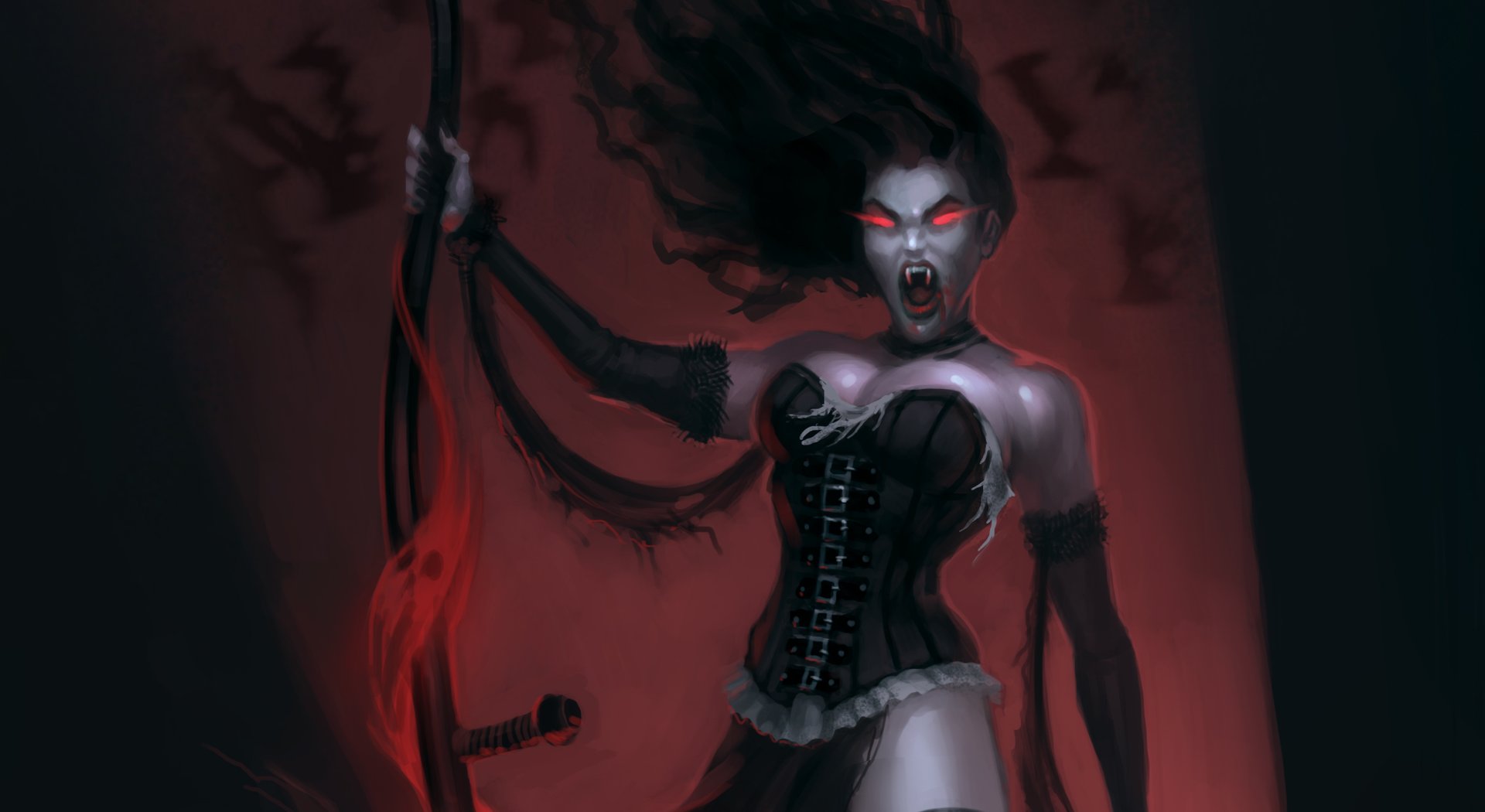
The world of Aetolia is vibrant, shaped by the myriad diverse races that build communities and live within it. Aetolia currently has 24 playable races, from winged Atavians and insectoid Horkval to frog-like Grook and fox-like Seyda. Many more races exist beyond these and the playable selection continues to expand.
Your choice has only a minor mechanical impact; instead, it largely determines your character’s appearance, racial abilities, and background in the world.
The histories and traditions below describe the communities your character might come from. You decide how much of that heritage they carry, what they believe, and where their loyalties lie.
Racial abilities and attributes
Racial skills are acquired automatically as you gain levels: one at level 1, another at level 31 and another at level 61. They include abilities such as a Grook’s ability to breathe underwater, an Atavian’s ability to fly, or a Xoran’s fire breathing. Within the game, RACIAL SKILLS lists your abilities and RACIAL HELP <skill> explains what each does. HELP RACES can also be read for a full overview of each race and their abilities.
Attributes come from a separate choice entirely independent from your race: your statpack. It sets your Strength, Dexterity, Intelligence, Constitution and Wisdom. As such, we recommend you always pick a race that matches your roleplay rather than the mechanical concerns your statpack will cover. Use STATPACKS in game to compare the available packs.
Changing your race
If you are unhappy with your race or statpack selection, you are more than welcome to reincarnate into a new race or statpack. All characters can reincarnate an unlimited number of times while they are still a newbie and then receive one free reincarnation after that. Should you wish to reincarnate again, you will need to purchase a crystal of rebirth (in game, AP INFO 209 gives more information).
The command is: REINCARNATE INTO <statpack> <race>.
Click any of the race names below to learn more about that race and its place within Aetolia.
Choose a race
Arborean
Arboreans are an ancient race of genderless, tree-like humanoids, two to nine feet tall, with long, gnarled limbs of fused roots and a thick slab of bark that may bear flowers, fruit, moss, or lichen. Created by Yanai, the Earthmother, and only recently brought back into existence, many possess an innate reverence for life, the land, and death alike, and finding their origin within the Cantor’s Copse.
Arqeshi
Arqeshi are powerful, slimy creatures built tall and strong, nearly identical to the Nazetu, except they have been cleansed of Corruption and Chakrasul’s influence, though She still sends temptations and nightmares to lure them back. Exiled by their former Nazetu brothers, they are a diasporic people whose largest community exists in the southeast, serving the cause of the Light.
Atavian
Atavians are slight, delicate, Human-like creatures distinguished by powerful, feathery wings that manifest in a wide and striking array of hues, much like their hair, skin, and eyes. Despite their mastery of the skies, they meet derision across much of the continent because of stereotypes about their licentious, untrustworthy character, and they have little unified culture, often having surrendered their heritage to win acceptance.
Djeirani
The Djeirani are a mysterious, darkly beautiful race adapted from arachnids, combining the best of Humans and spiders: they are notably tolerant of toxins, sensitive to vibration, and see amazingly well in the dark. Their skin and eye colour chiefly determine social caste, ranging from reddish-skinned, green-eyed peasants to violet-eyed, dark lilac-skinned nobility. They predominantly live in the city of Djeir and the Black Lake located beneath Azdun, as their poor acclimation to light and dry surface air often keeps them homebound.
Dwarf
Dwarves most closely resemble short, stocky Humans, with widely varying hues of eye, skin, and hair, and favour the mountains and highlands as a small but close-knit people, though extensive clan divisions persist. Their shared culture favours sophisticated arts and crafts, as well as an appreciation for home, hearth, and celebration, and many are divided in worship between the Gods Dhar and Ivoln.
Gnome
Gnomes are a race of diminutive humanoids, two to three feet tall, with knife-like ears and exaggeratedly proportioned limbs; small in stature but often keen in wit and intelligence, with a love of food, farming, and animal husbandry, and a reputation for ingenious magical enchantments. Traditionally isolationist and rooted in their home of Gorshire in the Valley of Lodi, they have only recently begun to set aside their insular ways with young Gnomes now exploring the lands as adventurers in their own right.
Grecht
The chiropteran Grecht are lithe, thin, bat-like people, stark black to slate-grey in appearance, with limited powers of flight thanks to the thin wing-flaps connecting their arms to their bodies. Native to the distant Dehkay Plateau high above the Northern Tundra, those who reside upon the continent tend to hail from the Siroccians or one of the cities, speak a mutually intelligible dialect of the Grecht tongue, and have begun to assimilate into the continent’s culture.
Grook
The Grook are a diasporic population of amphibious, frog-like creatures that vary widely in height, with colouration most commonly green, brown, or grey, or some combination of the three. With no central settlement, they are most commonly found in cities, where their high literacy rates and insular culture’s emphasis on education, magic, and mysticism make them ideal for service to the continent’s city-states and centres of learning.
Harpy
Harpies are a race of humanoid avians resembling large carrion birds with a Human woman’s chest and torso, with beak-like noses, large wings, twisted talons, and tough, rugged skin broken up by patches of feathers. Reputed for their raucous demeanour and a penchant for loud chaos, they organise themselves into flocks rife with constant power struggles and cunning deceit, though they place a high value on their communal bonds. Harpies are either female or non-binary, with trans males present but rare.
Horkval
The Horkval are a cooperative, disciplined race of insectoid people whose powerful legs let them reach areas others cannot and whose chitinous bodies give them natural protection unmatched by any other mortal race. Though known for their determination and teamwork, most outside the hives are strongly individualistic and their physical blessings leave them less prepared to master the magical arts.
Human
Humans are the most numerous and influential race on the continent, and though short-lived compared to many other races, they distinguish themselves by undertaking risky work, with many traders, criminals, and mercenaries being Human. They range widely in appearance, with light-skinned members tending toward Spinesreach and the north, while dark-skinned Humans live primarily in the southern reaches such as the Mhojave, the Liruma, and Enorian.
Imp
Imps are remarkably short creatures with horns, vestigial wings, tiny tails, and colouration that varies considerably; they were created as servants of the dead Goddess of Mischief, Khepri, to spread trickery and chaos wherever they roamed. The race is often regarded as high-strung, passionate, and mischievous, though likewise dangerously clever and unrelentingly vicious.
Kelki
The Kelki are sleek, smooth-skinned, fish-like creatures with scales in shades of grey and blue, and are the favoured race of the amorphous sea Goddess Slyphe. Once the most populous race in the east, they are now scattered across the eastern coast and more sparsely elsewhere, with their most populous settlement being Mournhold.
Kobold
Kobolds resemble tailless, humanoid canines: bipedal, with a distinct hunch to their backs and faces ranging from dog- or hyena-like to rat-like. Children of the former Goddess Khepri, they are expert stone and gemcutters and innovative, if dangerous, tinkerers who retain their skill at casting spells, with most living in Rock Bottom beneath the Great Rock or in Siha Dylis beneath Azdun.
Minotaur
The Minotaurs are a race of humanoid bovines standing six to seven feet tall, with tough, mangy fur, large horns, hooves, and thick, developed muscles, and they tend to be brash, stubborn, and quick to fight, yet possess a sharp, often underestimated cunning. Severn, the Manipulator, granted them that cunning in exchange for their loyalty; many remain fiercely devoted to Him, though since the destruction of their ancestral village of Sterion, they can be found in the Shadow Keep, at Kisaut Landing, and in small pockets elsewhere.
Mhun
The Mhun are the long-suffering survivors of countless conflicts in southwest Sapience; shorter than Humans but taller than Dwarves, with dark skin, eyes, and hair, and noted for being adaptable, frugal, and endowed with a certain cunning. Originally from the Mhojave desert, their homeland now lies within the Siroccian mountains, and religion forms a central core to their existence, whether through traditional faith or worship of the Gods of Sapience.
Nazetu
Originating on the Nazedha Isle in the western seas, the Nazetu are slimy-skinned creatures, viscous and foul-smelling, with broad, tall builds and dark, densely coiled hair. Chakrasul created them as agents of corruption and decay, and they arrived on Sapience in 111 MA in a failed attempt to invade Ashtan.
Ogre
Ogres are massive in height and girth, with black, beady eyes, angular, imposing features, and stone grey skin that lets them blend in with caves and rocky outcroppings. Though cousins to the warlike Orcs, they tend to devote their intelligence to religion and magic despite their great size, and many Ogre men bear ritual scarification added throughout their lifetimes.
Orc
Orcs have large, fierce teeth with two bottom tusks, angular features, and mottled, lush green skin, and many Orc men bear ritual scarification passed down through families and marking their coming of age. Cousins to the Ogres and Trolls, they are renowned for their cunning in war and their long history of military innovation, though for some, their warlike nature has been tempered somewhat by conversion to the Light.
Rajamala
The Rajamala are Human-like felines who most closely resemble bipedal tigers, with bifurcated eyes and fur that is most often tawny, red, or brown dashed with dark streaks, though sometimes purest black or white. They hail from the Itzatl Rainforest as descendants of the once-great empire of Farsai, and most now live elsewhere on the continent or in Saluria, the last indigenous Rajamala village in the Itzatl.
Seyda
The Seyda are a vulpine race of fox-like humanoids with large, mobile ears, long, expressive tails, and fur ranging from russet and golden to silver and snow, created by Lleis, the Lady of Renewal, in ages past. Long thought all but extinct, they returned in great numbers when their ancestral village of Vimuna was freed from millennia of magical stasis, and they remain a close-knit, nature-loving people devoted to the Cycle of the seasons.
Troll
Trolls hail from the frigid northlands and are distinguished by their powerful builds, rough, leathery skin, infamous stubbornness, and a boundless appetite that fuels their legendary powers of regeneration. With little cultural emphasis on learning, many turn to martial, mercenary, or criminal work, and other races often regard them as unintelligent, partly because many speak a nonstandard dialect of Aetolian.
Tsol’aa
Tsol’aa are lithe, pointy-eared, Human-like creatures with brown skin, eyes ranging from dark brown to green, and most of the couple thousand remaining are situated within the Duiran Council. The grand majority perished when a Dreikathi weapon destroyed the Aalen forest and infected their kin, leaving their culture closed and isolated, centred on a reverence for nature and the worship of the dead Goddess Lleis and Life itself.
Xoran
The Xorani are bipedal, reptilian people remarkably diverse in height, build, and colouration, with all the colours of the rainbow and more within a Xoran’s purview. Versatile and powerful, they were the foremost warriors of the early southeast and are famed for their legendary ability to breathe fire.
See also: Character Classes · The World of Aetolia · Getting Started in Aetolia