Game updates, world events, and news from Aetolia - delivered to your inbox.
Name Please enter your name. Email Please enter a valid email address.Unsubscribe at any time via the link at the bottom of any email.
The Luminary of Aetolia
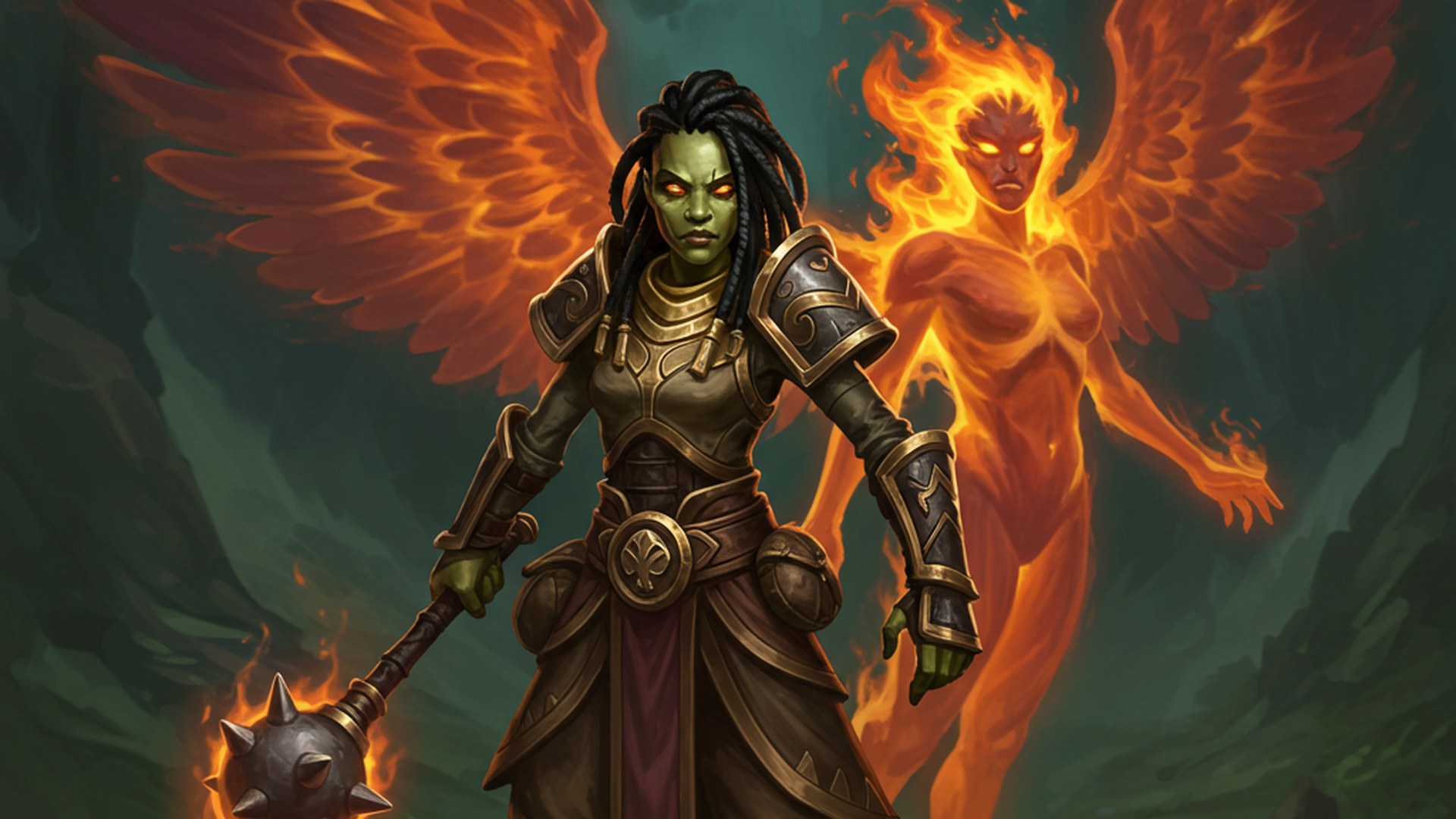
The Luminary is Aetolia’s warrior-priest of Light, a Spirit-tethered class in Enorian that wields Spirituality (divine prayer), Devotion (ritual faith), and Illumination (sacred fire), all carried forward inside the modern Illuminai guild.
| At a glance | |
|---|---|
| Tether | Spirit |
| City | Enorian |
| Guild | Illuminai (Patron: Celezor, Accord of the Righteous) |
| Skill sets | Spirituality, Devotion, Illumination |
| Mirror class | Earthcaller (Shadow) |
| Sister class in guild | Zealot |
| Signature mechanic | Guardian angel summoned via Idar’s contract with the Triad |
| Best for | Players who want a faith-driven cleric, mace and shield, and sacred fire |
The Luminary tradition began in 97 MA, founded in the wake of the old Priests’ corruption. The guild that bore the name was dissolved in 452 MA, merging with the Daru monastic order to form the modern Illuminai. The Luminary class now lives within the Illuminai guild in Enorian, alongside its sister class, the Zealot.
This is the cleric class of Aetolia. If you want a priest-knight built on mace, shield, sacred fire, and a guardian angel sworn from the Plane of Spirit, the Luminary is the most direct expression of that fantasy in the game.
Origin and lore
The first Illuminai emerged in the epoch before the Midnight Age, a southeastern movement founded in the city of Shallam (now Enorian). Their faith centered on Mebrene, the essence of fire, and they were the first practitioners of Illumination. Under the prophet Kayalenki, the Illuminai overthrew a corrupt Sultan and ran the city through spiritual and political reform. They eventually fell to internal dispute and outside threats, and the sultanate was restored.
Centuries later, after the ancient Priests’ guild consumed itself in corruption and frivolity, the modern Luminaries were founded in Slyphian, year 97 MA. They combined the old teachings of Spirituality and Devotion with the rediscovered art of Illumination from the original Illuminai. For centuries, they led the war against Darkness, wielding mace, shield, angel, and sacred magics against the enemies of Light.
In year 452 MA, after the War of Night, the Luminaries were dissolved by order of the prophet Kayalenki. Their members merged with the Daru monastic order to form the Illuminai reborn. The Luminary tradition became the Luminary class within the new guild. The Daru tradition became the Zealot class.
The modern Luminary still teaches faith, ritual, and devotion. The legacy of the dissolved guild lives on in the Illuminai’s halls.
Skill sets
The Luminary skill sets are Spirituality, Devotion, and Illumination.
Spirituality is prayer and communion. It draws on Rewh’va, the Plane of Spirit, and the Triad of Angels who rule it. Through that channel the Luminary calls on the divine for protection, healing, and the will to act.
Devotion is the ritualized faith skill. It draws on the Inner Spark within every living, sentient being and on the Grand Flame, the sacred fire in Enorian that serves as a point of communion between mortality and the Gods of Spirit. Devotion is also the skill that anchors the Luminary’s angelic companion, summoned through an age-old contract between Idar and the Triad. The angel does not physically manifest. It projects its presence across the cosmos to protect, heal, and strike on the Luminary’s behalf.
Illumination is the fiery evocation art, the legacy of the original Illuminai. Sacred fire and light. Sparks linger in the air after the working ends; light follows wherever the rite just happened.
Luminaries also train with mace and shield, combining martial discipline with their spiritual power.
Skill abilities
Visual style and identity
Luminaries are well-armored, formidable presences in battle, forgoing extraneous movement in favor of powerful, direct strikes with magic and shield. The mace is withheld for targeted strikes and expressions of light and fire. Even devotional rites tend to be restrained: small motions, controlled gestures, deliberate piety. Light and sparks often linger about them during and after the fiery evocations of Illumination. The aesthetic is priest-knight: armor, mace, shield, angel, and the slow steady glow of holy work.
Side effects of the work
Spirit is the most lively and energetic of the elements. Over time it shifts the personality of anyone who draws on it regularly. Even calm Luminaries may become more excitable, more extreme, or harder to read. That sits awkwardly alongside the controlled piety the class also demands.
There is a second pattern. Discipline, faith, and repetition pull Luminaries toward ritualized everyday behavior. The shape varies: a blessing spoken before meals, a particular way of washing hands, a specific way of walking home or preparing for bed. The rituals are how a Luminary stays grounded. Some find this comforting. Others find it constricting. Either way, the class leaves a mark on the routines of the body, not just the work in the field.
Who plays this class
The Luminary is a class for players who want the cleric or priest-knight archetype done seriously. Spirituality and Devotion are skills that imply worship of the Gods of Spirit. Illumination ties the Luminary specifically to Enorian and to Mebrene. Most Luminaries directly worship one of the Spirit Gods, though faith does not require a single named patron. All of them work to bring about the end of the Midnight Age and the prophesied Age of Dawn.
Mechanically, the class suits players who like managing a companion alongside their main combat kit. The angel is a genuine support tool, not a cosmetic. Mace-and-shield is a clean starting point; the magic side has enough depth to keep most players busy well past the early game.
City and guild
The Luminary guild home is the Illuminai, based in Enorian, the Hammer of Dawn. Patron: Celezor, Accord of the Righteous. The Illuminai houses both the Luminary class and its sister class, the Zealot (martial devotees descended from the Daru monastic tradition who fight with Zeal, Purification, and Psionics rather than mace, shield, and angel).
Joining the Illuminai means committing to Spirit. You will not be able to actively hold any Shadow-aligned classes alongside it, though you can multiclass into other Spirit classes or any of the seven untethered classes. Race is independent of class, so you can play a Luminary of any Aetolia race.
The Luminary mirror is the Earthcaller, Bloodloch’s warrior-priests of Azvosh, the Plane of Earth. Both are warrior-priest classes that channel a plane through ritual. The Luminary draws on Rewh’va and the Grand Flame. The Earthcaller draws on Azvosh and the bone-art of Subjugation. Same priest-warrior chassis, opposite tether.
Frequently asked questions
Other classes to consider
Three classes worth a look if you like the Luminary profile. Or see the complete class roster for the rest of the roster.
Earthcaller
The Luminary’s Shadow mirror. Warrior-priests of Azvosh, the Plane of Earth. Subjugation (bone magic and croziers), Tectonics (lava and stone), Apocalyptia (the Earthen Dirge). Pick Earthcaller if you like the priest-warrior chassis but want to channel earth and undeath rather than spirit and light, and want to play out of Bloodloch instead of Enorian.
Zealot
The Luminary’s sister class in the Illuminai. Zeal (fused Tekura and Duamvi martial work), Purification, Psionics. Pick Zealot if you like the Illuminai’s faith frame but want martial-arts combat and psionic discipline rather than mace, shield, and angel.
Templar
Enorian’s heavy martial knight. Battlefury, Righteousness, Bladefire. Pick Templar if you like the holy-warrior chassis but want disciplined weaponry and Bladefire-empowered steel rather than the mace-shield-priest expression of the Light.
Back to the complete class index | Aetolia beginner’s guide | Create your Luminary and play free