The Imps of Aetolia

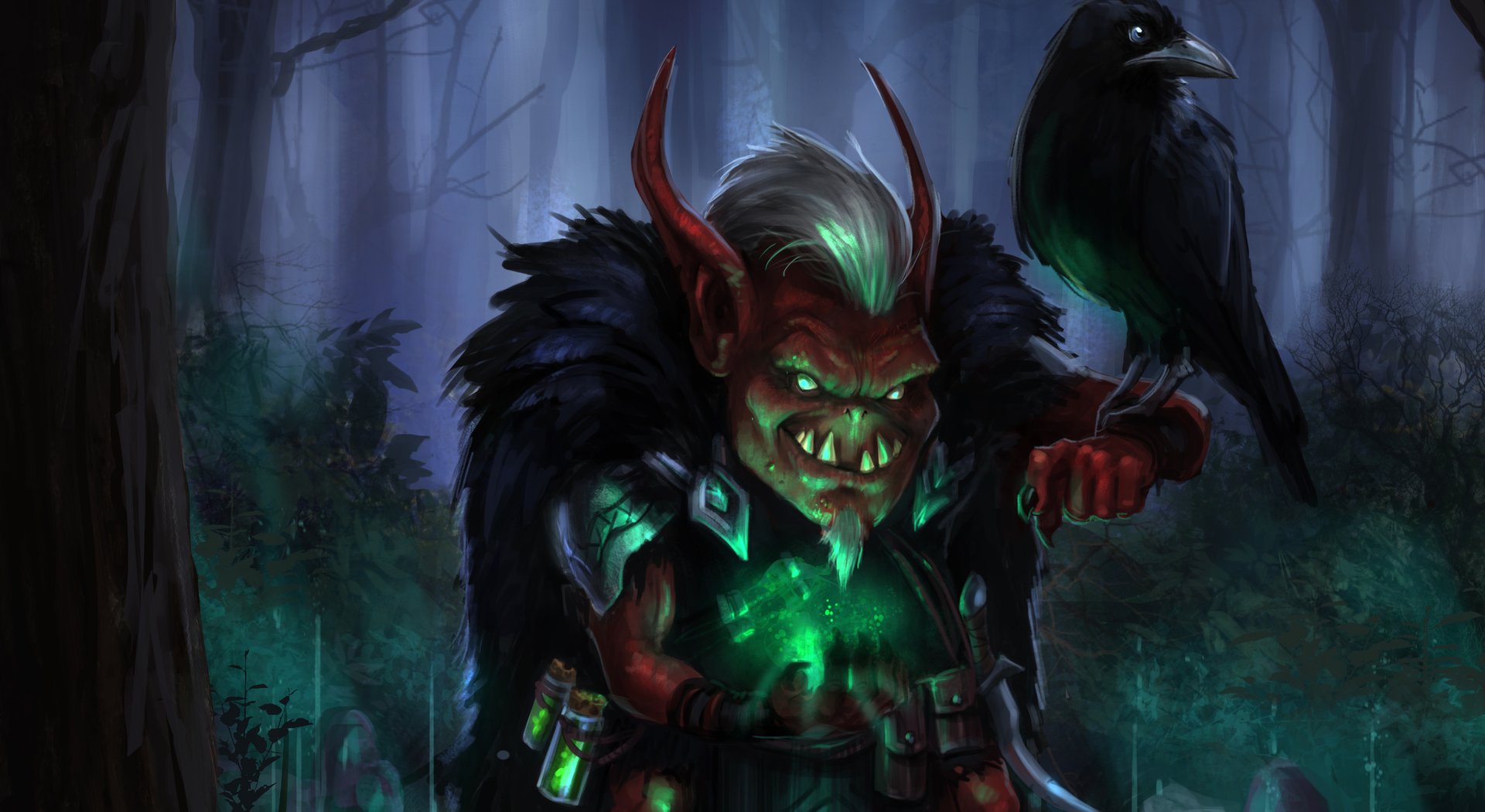
Imps are small, horned, winged tricksters with a reputation for being dangerously clever and unrelentingly vicious. The Goddess who made them is dead, the war they won against the Pixies is centuries past, and most of Aetolia still treats them as a problem waiting to happen. If you want a race that walks into every room already on someone’s bad list, imps fit.
At a glance
| At a glance | |
|---|---|
| Native region | Sehal (central Sapience), after their nomadic period |
| Cultural home | No single homeland; widely scattered, often drawn to Bloodloch |
| Spiritual frame | Servants of the dead Goddess of Mischief, Khepri; no current divine patron |
| Distinctive trait | Short, winged, horned tricksters with a deep cultural relationship to chaos |
| Suits play styles | Trickster roleplay, shadow-aligned chaos, Bloodloch politics, outsider energy |
| Gender lock | None |
Imp lore and origin
Imps were created by Khepri, the Goddess of Mischief, to spread mischief, trickery, and chaos across the continent. They started out as a nomadic people, and that wandering eventually brought them into the central region now known as Sehal. The Pixies were already there. The long war between the two races ended with a decisive imp victory and the establishment of a royal imp bloodline, which is the foundation of what passes for imp political memory.
Khepri is no longer a presence in Aetolia. She was eaten by the Almighty Kerrithrim and ended there, and a brief return as the fused Sanguine Ysmali also collapsed. What that means for present-day imps is that their creator-Goddess is gone, the cosmological reason for their existence is past tense, and the religious thread other races lean on for identity is not available to them. Some imps treat that as freedom. Others read it as a slow, quiet grief that the rest of the continent does not see.
Imps are not the only race Khepri shaped. The Kobolds and Goblins are her older children, prototypes who preceded the imps as her favored race. The official line, recorded in the Kobold help file, is that the Kobolds were driven from Sehal because they were seen as inferior. The imps know this. So do the Kobolds. It is the kind of family history that does not heal cleanly.
If you want a race whose lore is built around mischief as a worldview rather than mischief as a personality quirk, imps fit.
Imp appearance
Imps are remarkably short, with horns, vestigial wings, and tiny tails. Their coloration varies more than almost any other Aetolian race. The basic red is common, but canary yellows, lurid greens, and deep purples are all valid choices, and the in-game roleplay tips actively encourage players to lean into the wilder end of the spectrum.
The vestigial wings are part of the silhouette but not really part of the toolkit. Imps can hover, not fly, and the wings read more as inheritance from their lower-planar origin than as a functional limb. Combined with the horns, the tail, and the size, an imp in a room full of Humans, Atavians, and Trolls looks unmistakably non-native. That visibility is the point. Imps were not built to blend in.
Imp racial abilities
Imps have three racial abilities, unlocked at character creation, level 31, and level 61.
- Hover (available at character creation). Syntax: `HOVER` and `SETTLE`. Your wings let you hover slightly above the ground, granting you the levitation defence.
- Heatsight (unlocks at Level 31). Syntax: `HEATSIGHT`. Your superior eyesight senses the heat of your prey, briefly revealing those who would otherwise be hidden.
- Mischief (unlocks at Level 61). Passive. Tricks and mischief are part of your nature. When performing a deceitful act, the difficulty modifier is a flat 5% less. See `HELP DECEIT` for how that system works in detail.
The package reads as trickster from top to bottom. Hover keeps you off the ground (and so off any traps that key on ground contact), Heatsight strips concealment off a hidden opponent, and Mischief is a small but always-on bonus that rewards staying with the race long enough to hit 61.
Imp base statistics
Aetolia uses statpacks, a separate choice from race that sets your five base stats. The values below are the racial baseline before statpacks apply.
| Stat | Value |
|---|---|
| Strength | 10 |
| Dexterity | 15 |
| Intelligence | 13 |
| Constitution | 11 |
| Wisdom | 9 |
Imps lean hard into Dexterity, with solid Intelligence, average Constitution, and low Strength and Wisdom. That profile reads as quick, clever, and physically fragile, which matches the lore. Your statpack does most of the actual work, so the racial baseline is a starting point rather than a ceiling.
How to roleplay an Imp in Aetolia
- Cultural anchor. No single homeland. Imps won Sehal centuries ago but were never tied to one city the way Mhun are to Moghedu or Atavians to their isolated villages. That rootlessness gives a player flexibility. An imp can be Sehal-born aristocracy with a claim on the royal bloodline, an opportunist who drifted into Bloodloch, or a wanderer with no ties at all.
- Faction-cultural alignment. Shadow-leaning by default, and Bloodloch is the natural home for an imp who wants city politics. The corruption-aligned frame of the city absorbs the imp temperament more easily than Enorian‘s Spirit purity does. That said, plenty of imps have crossed the line into Spirit cities for personal reasons, and the contrast tends to play interestingly at the table.
- Religious texture. Khepri is dead. An imp can carry that as a private wound, ignore it entirely, or transfer their worship to one of the living Gods. There is no current divine framework that claims imps the way Slyphe claims Kelki or the Mhun Spirits claimed Mhun. That gap is roleplay material.
- Common archetypes. Other players will read an imp as a trickster, an instigator, or a small dangerous thing best watched carefully. The official roleplay tip is worth repeating: mischief is not always evil and not always innocent. It is a broad concept covering subversive behavior across the moral spectrum. Lean into the variety, or play the one imp in town who is sincerely trying to be helpful and finds it constantly going wrong.
Which Aetolia classes fit an Imp
Any race in Aetolia can play any class. Race never locks you out. Some class archetypes share a thematic resonance with imp lore, which can make for a naturally cohesive character.
Syssin
Spinesreach’s deception specialists, built around stealth, illusion, and venom. Syssin and imp share the same instinct for working sideways through a problem, and a Syssin imp leans into the trickster identity without softening it. The Spinesreach city tie sometimes pulls against the Bloodloch default for imps, which makes for tension worth playing.
Indorani
Bloodloch’s pact-wielders, drawing on demonic and shadow-bound entities to fight. The lower-planar resonance is direct: an Indorani imp reads as a creature returning to a tradition older than their race, calling on the kinds of forces that shaped imps in the first place. Mechanically intricate, narratively heavy.
Sciomancer
Spinesreach’s shadow mages, working illusion and entropy from the arcane side rather than the assassin side. Sciomancer takes the imp instinct for misdirection and runs it through a scholar’s lens. A Sciomancer imp reads as a trickster who decided to study the craft rather than just live in it.
Praenomen
Bloodloch’s vampires. The frame works for an imp who has gone fully into shadow corruption and traded what was left of Khepri’s legacy for undeath. Mechanically very different from the other three picks, but thematically a strong fit for a player who wants to commit to the Bloodloch arc.