Game updates, world events, and news from Aetolia - delivered to your inbox.
Name Please enter your name. Email Please enter a valid email address.Unsubscribe at any time via the link at the bottom of any email.
The Tsol’aa of Aetolia
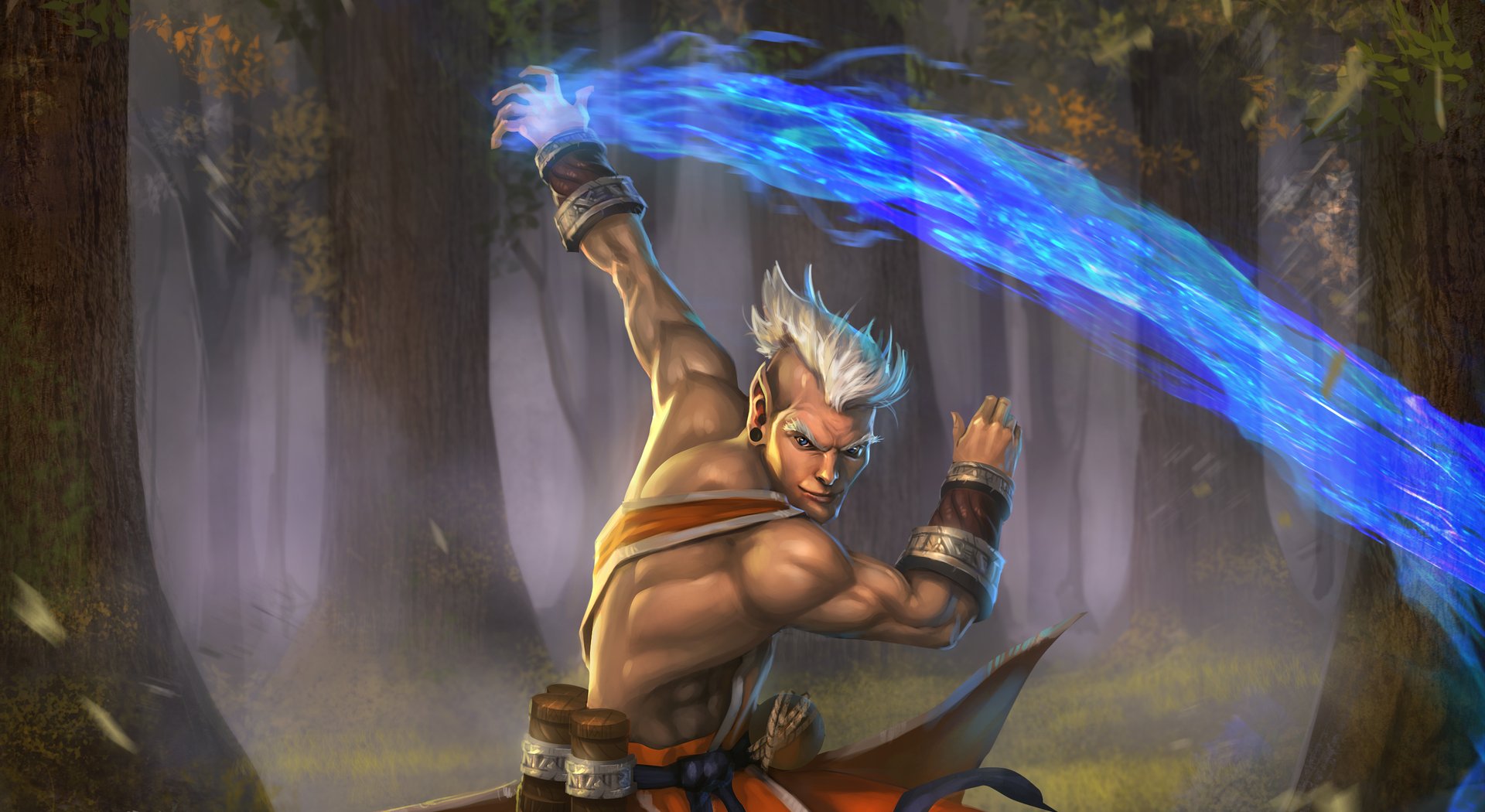
The Tsol’aa are Aetolia’s pointy-eared survivors, an elven-like race of roughly two thousand people who outlived the destruction of their forest homeland. Their culture closed inward after that calamity, anchored on reverence for nature and the worship of a dead Goddess. If you want a long-lived race that survived the near-destruction of its people and built its faith around what it lost, the Tsol’aa fit.
At a glance
| At a glance | |
|---|---|
| Native region | The Aalen forest (destroyed); most survivors now in the Duiran Council |
| Cultural home | Duiran (forest city of nature and the Cycle) |
| Spiritual frame | Reverence for nature; worship of the dead Goddess Lleis and Life itself |
| Distinctive trait | Long-lived, elven-like survivors of a race-wide catastrophe with a closed culture and a faith for the fallen |
| Suits play styles | Survivor roleplay, nature-bound faith, grief and renewal, scholarly elegance |
| Gender lock | None |
Tsol’aa lore and origin
The Tsol’aa are lithe, pointy-eared, Human-like creatures with brown skin in varying hues and eyes that range from dark brown through hazel to green. Of the couple thousand still alive, most live within the Duiran Council, with a smaller number wandering Sapience or settling elsewhere. They are vaguely inspired by elves in the broader fantasy sense, but their identity in Aetolia is shaped by something more specific: the destruction of their homeland.
The Aalen forest was the Tsol’aa heartland until a Dreikathi weapon shattered it. The initial impact killed every Tsol’aa living there. Worse, the weapon left a plague behind. It infected and killed the Tsol’aa who came afterward to mourn their dead and rescue survivors, so the race lost a second wave on top of the first. What remains is a fragment of what was: scattered families, a few thousand people, an old culture trying to remember itself.
The Tsol’aa once held reverence for Lleis, the Lady of Renewal, whose tenets emphasised the seasons and the Cycle. Lleis is dead now. Her essence was ripped apart by Dendara’s corruption in a final act of sacrifice that brought one last resurgence of life to the Great Oak of Duiran. The Tsol’aa keep her memory as worship: a faith for the fallen Goddess and for Life itself, observed in the seasonal cycle she once watched over. Some still mark the year by hunts in summer and rituals across the changing seasons. Mooncakes are a traditional food. If you want a faith built on mourning and seasonal ritual rather than the worship of a living god, the Tsol’aa offer it.
A new Tsol’aa character will not necessarily know all of this. After the Aalen, many Tsol’aa grew up without a strong connection to the culture of their forebears. Some seek to rediscover lost ties and rites. Others reject them outright. Both are legitimate paths.
Tsol’aa appearance
Tsol’aa are slender and pointy-eared, with brown skin in varying shades. Their eyes run from dark brown through hazel and into green. They are roughly Human in proportion but lighter of build, with the slighter frame of a people who tend to live long lives.
Descendants of survivors of the Aalen plague sometimes carry physical imperfections or markings as inherited side-effects of the weapon’s lingering corruption. That is a roleplay hook, not a fixed trait; some Tsol’aa show no scars at all.
Tsol’aa racial abilities
The Tsol’aa have three racial abilities, unlocked at character creation, level 31, and level 61.
- Meditator (available at character creation). Syntax: `MEDITATE`. While meditating, you gain additional mana and willpower regeneration compared to others.
- Foraging (unlocks at Level 31). Syntax: `FORAGE`. Experience with nature lets you occasionally find edible food in non-urban locations, reducing hunger. In fertile locations, you are guaranteed to find food, and it restores more nutrition than normal.
- Lucidity (unlocks at Level 61). Syntax: `LUCIDITY`. Quiet your mind and let your secondary senses act for you. You can cure the blackout affliction at a cost of 25% of your maximum mana. Cooldown: 900 seconds.
The package leans into mental discipline and quiet woodcraft, which suits the lore. Meditator gives a Tsol’aa class with mana or willpower demands a constant edge. Foraging keeps the race independent in the wilderness, which echoes their reverence for nature. Lucidity is a long-cooldown panic button against blackout, worth the level 61 wait if you fight in the kinds of fights where blackout actually lands.
Tsol’aa base statistics
Aetolia uses statpacks, a separate choice from race that sets your five base stats. The values below are the Tsol’aa racial baseline before statpacks apply.
| Stat | Value |
|---|---|
| Strength | 11 |
| Dexterity | 14 |
| Intelligence | 11 |
| Constitution | 13 |
| Wisdom | 10 |
Tsol’aa lean hardest into Dexterity, with solid Constitution and average Strength and Intelligence. That profile reads as agile survivors more than as brute warriors or pure scholars, though your statpack does most of the actual work.
How to roleplay a Tsol’aa in Aetolia
- Cultural anchor. The Aalen is gone. Most living Tsol’aa carry that as a defining piece of their identity, whether by tradition or by reaction against it. The Duiran Council is the modern centre of Tsol’aa population, so a default Tsol’aa is a forest-dweller raised among others who share at least some of that history.
- Faction-cultural alignment. Duiran by default. The forest-city of nature and the Cycle suits Tsol’aa reverence for the natural world and worship of Life itself. The alignment is cultural, not mechanical; a Tsol’aa can join any city without breaking lore, but a Bloodloch Tsol’aa or a Spinesreach Tsol’aa is making a statement. Independent Tsol’aa wander Sapience.
- Religious texture. Worship of the dead Goddess Lleis runs deep, and so does devotion to Life as a principle that outlasts any one deity. Seasonal observance is the most visible expression: hunts in summer, rituals at the changing seasons, the practice of leaving offerings. Some Tsol’aa instead push toward general helpfulness to those in need. Others have rejected the old faith after the Aalen and follow other Gods, or none.
- Common archetypes. Other players will read a Tsol’aa as long-lived, somewhat reserved, and shaped by old grief. Lean into that, or play against it. A loud, gregarious Tsol’aa who refuses to grieve is just as valid as a quiet survivor with a ritual for every season.
Which Aetolia classes fit a Tsol’aa
Any race in Aetolia can play any class. Race never locks you out. Some class archetypes share a thematic resonance with Tsol’aa lore, which can make for a naturally cohesive character.
Sentinel
Forestal hunters of Duiran. Sentinels walk the wilds, bond with animal companions, and hunt anything that breaks the Cycle. Tsol’aa reverence for nature and post-Aalen attachment to the forest map onto Sentinel work as directly as any pairing in Aetolia.
Sylvan
Nature-bound Duiran class drawing on Fae magic, with claws, fangs, and a blood oath to Dia’ruis. The Tsol’aa relationship with the forest is the cultural foundation Sylvans build careers on. A Tsol’aa Sylvan reads as someone who turned grief over the Aalen into a sworn defence of every other living place.
Shaman
Spirit-led Duiran class anchored in ancestry, ritual, and the unseen. Tsol’aa worship of the dead Lleis and the everyday observance of seasons gives a Shaman of this race a personal liturgy other Shamans do not automatically have. The dead-Goddess piece fits Shaman work especially well.
Bard
Untethered class that uses Songcalling to shape reality through music. The Tsol’aa origin myth tells of a young man named Sironn who taught the Canopy what a song was, and how his people became “the Song of the Canopy” in answer. A Tsol’aa Bard can lean on that origin in a way no other race can.