Game updates, world events, and news from Aetolia - delivered to your inbox.
Name Please enter your name. Email Please enter a valid email address.Unsubscribe at any time via the link at the bottom of any email.
Seyda
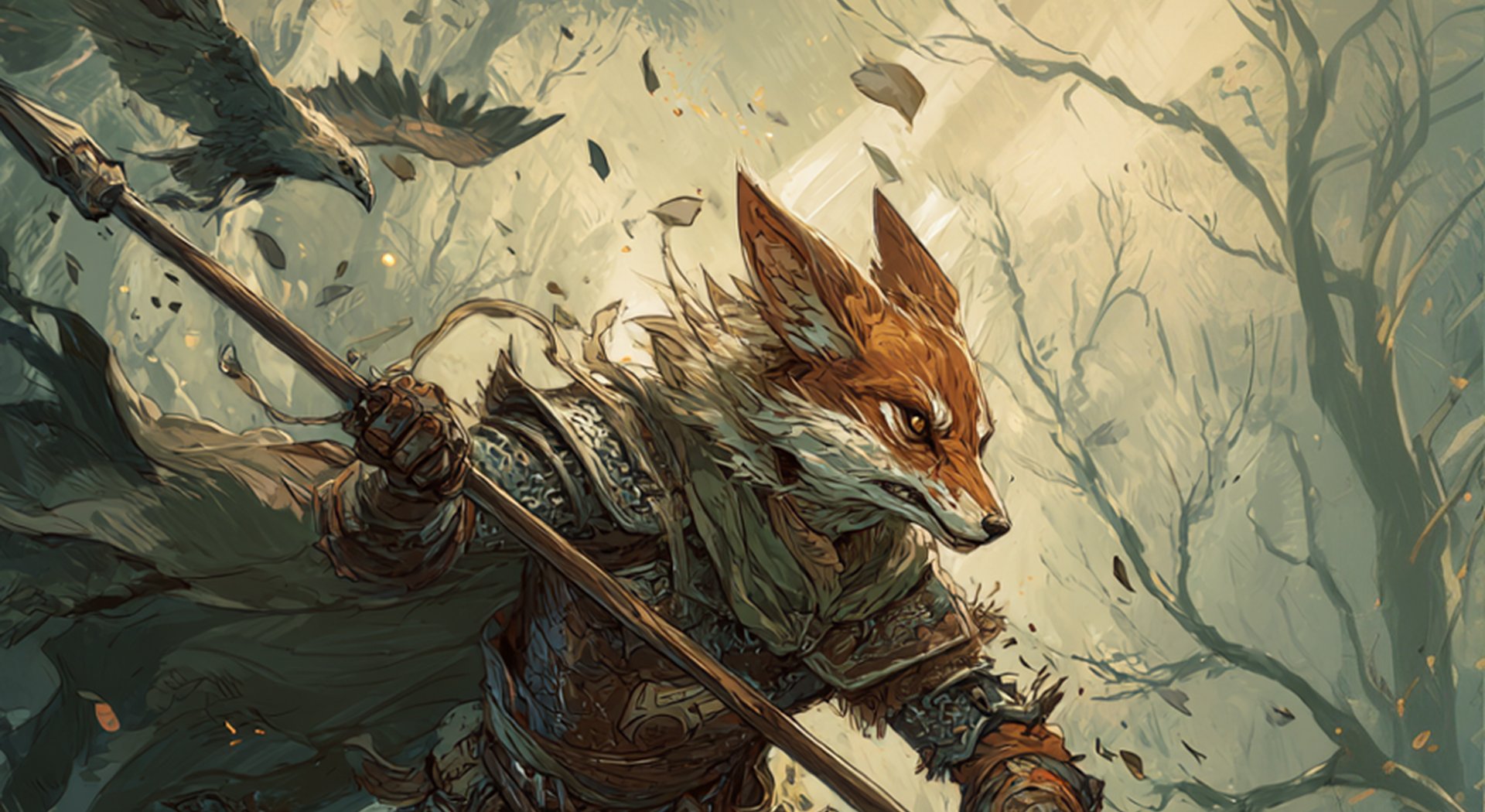
The Seyda are a vulpine race of fox-like humanoids created by Lleis, the Lady of Renewal, in ages past. Long thought to be all but extinct, with only scattered individuals remaining across Sapience, the Seyda population experienced a miraculous resurgence with the return of their ancestral village, Vimuna, in Year 12 AC.
At a glance
| Feature | Details |
|---|---|
| Appearance | Fox-like humanoids with mobile triangular ears, varied fur and expressive bushy tails. |
| Origins and communities | Vimuna, returned from magical stasis, and smaller communities across Sapience. |
| Culture | Lleisian faith, the seasonal Cycle, communal life and the recovery of fragmented memories. |
| Racial abilities | Digging; Bodyheat; Renewal |
Return from stasis
The Seyda’s liberation came at a price, however. Old Witch Tala saved their minds from the madness of millennia-long imprisonment by drawing away their suffering and transferring it to their captor, Morvaethe. As a result, the Seyda possess only fragmented memories of their lives before the modern age, with gaps where the weight of centuries would have crushed their sanity. Their ages and birthdays have been adapted to the current era, so that a Seyda who might have been born thousands of years ago now celebrates a birthday merely decades past, their minds accepting this temporal adjustment as natural truth.
Vimuna
The village itself had been captured in stasis by the ancient sorcerer Morvaethe, the Curator, who sought to preserve it at the height of its prosperity. For uncounted ages, the Seyda of Vimuna remained frozen in time, unaware of the world’s changes around them. Their release from this georamic enchantment has brought both joy and sorrow, for while their numbers have been restored, they must now adapt to a world where their beloved Goddess no longer walks among them as She once did.
Appearance
| Trait | Details |
|---|---|
| Eyes | amber, grey, black, hazel, light-green, mahogany, umber, silver, green |
| Ears | Large, triangular, and highly mobile, capable of swivelling to track sounds |
| Size | 4.5 – 5.5 feet / 1.4 – 1.7 metres |
| Fur | Highly varied – russet, silver, sable, golden, cinnamon, dark, snow, brindle, flame-colored |
| Tails | Long and bushy, highly expressive of emotional state |
The Seyda are bipedal fox-folk with elongated, vulpine muzzles and dark noses. Their bodies are covered in fur of varying colours and patterns, with many displaying lighter colouration on ear tips, tail tips, and around the muzzle. They possess sharp claws on both hands and feet, though most keep them trimmed for daily life. Males often have slightly larger builds and may develop manes extending from head to shoulders, while females tend toward more slender frames.
Culture and beliefs
The Seyda culture is deeply intertwined with the worship of Lleis, the philosophy of the Cycle, and the eternal progression through spring (birth), summer (growth), autumn (harvest), and winter (death and renewal). Many Seyda associate themselves with a particular season that resonates with their personality and life path, though this association often changes throughout their lives as they embrace personal renewal.
Community is paramount to the Seyda. They eschew large, impersonal cities in favour of smaller settlements where every individual is known and valued. Their homes are often built into hillsides or woven seamlessly into forest environments, reflecting their desire to live in harmony with nature rather than dominating it.
Since their return from stasis, the Seyda have faced a spiritual crisis. Those who cannot accept that Lleis no longer walks among them have scattered to the winds, some even joining societies antithetical to their traditional values and religious beliefs. However, most maintain their faith through the simple acts of the seasons – planting in spring, tending in summer, harvesting in autumn, and resting in winter – and finding the divine in these activities.
Settlements
Vimuna
The ancestral home of the Seyda, located where the Aureliana Forest meets the Liruma Scrubland. This village existed during the Age of Despair as a thriving centre of Llesian worship until it was captured in magical stasis. Now returned to the world, it serves as both a living museum of ancient Seyda culture and a beacon calling scattered Seyda home. The village exemplifies traditional Seyda values: communal gardens and kitchens, shared childcare, collective decision-making, and leaving offerings for those in need. Wooden charms and tokens are crafted and exchanged as expressions of community bonds, often telling stories or marking important events.
Small Seyda communities
Before Vimuna’s return, small pockets of Seyda were scattered across Sapience, often in forested regions or areas sacred to Lleis. These communities, never more than extended family groups, maintained what Lleisian traditions they could while adapting to survive in a world that had largely forgotten them.
Racial abilities
Level 1: Digging
Syntax: DIG or BURY <item>
Your hands are rugged enough to dig a hole in the ground without needing a shovel.
Level 31: Bodyheat
This ability is passive.
Your body produces extra warmth, giving you an extra 2% resistance to cold-based damage.
Level 61: Renewal
This ability is passive.
If you are below your highest recorded level and experience, you will gain 3% more global experience.
Class ideas for roleplay
These are potential starting points for a character’s story and are offered as suggestions only. You can make almost any class or race combination work in Aetolia as your race gives no special advantage with these classes; availability follows the usual class and guild rules.
Shaman
A Seyda priest could carry Vimuna’s seasonal observances into the Praadi of Duiran. Serving the Guardians of Dia’ruis offers a way to continue honouring Lleis through the living Cycle, while learning how that faith has changed during their people’s absence.
Bard
A Seyda singer might collect the fragments of memory left after Vimuna’s release and set them beside accounts preserved elsewhere. Djeir’s Theatre of Shadows would teach them to give those stories dramatic form, while its assassination tradition sharply challenges their communal upbringing.
Oneiromancer
A Seyda dream-worker could seek ways to preserve the memories and colours of a home nearly lost to stasis. Oneiromancy’s resistance to Shadow offers a cause they might share with Duiran, while leaving room to explore what can still be remembered without claiming to restore the missing centuries.
See also: The Races of Aetolia · The World of Aetolia · Character Classes